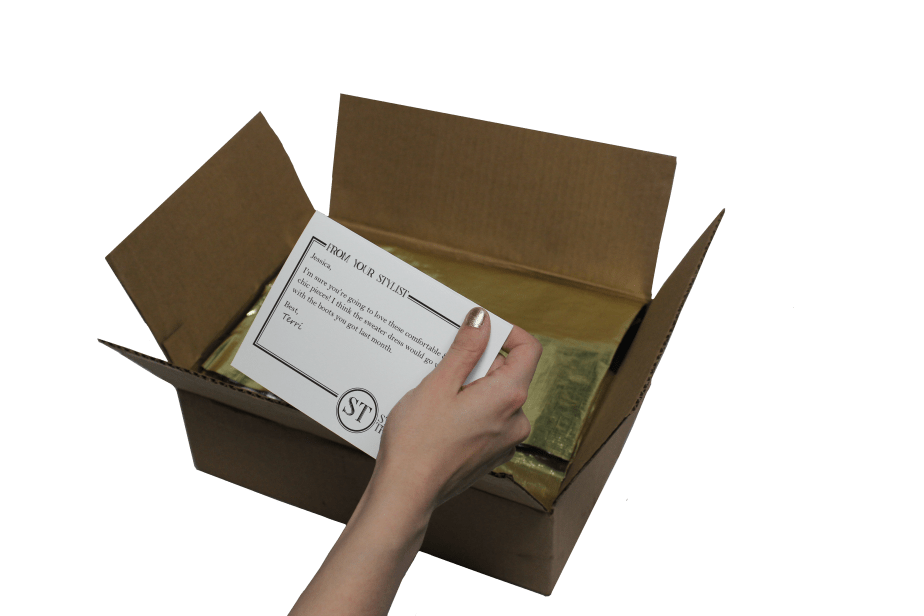
Stitch Fix is a personalized clothes-shopping service that sells individually curated boxes of clothing and accessories to fit a customer’s style and budget. Stitch Fix styles wardrobes for men, women, or children, so the whole family can look trendy. Customers may return any or all clothing items at no extra cost, adding independence and flexibility to make it a truly unique experience. Once people start using Stitch Fix, they get a stimulus response from getting to unwrap a “gift” with fashionable items chosen by a personal stylist. The detailed personality and style quiz involved in creating a Stitch Fix account plays into how people perceive it as a highly personalized and unique experience worthy of their time and money. Mere Categorization Effect shows that the presence of product options and categories makes customers believe that there is a wider variety and higher quality of products. A study on customer satisfaction proposed that the “role of categories is that of a perceptual cue than an information-based cognitive process,” (Mogilner et al., 203). Stitch Fix members also get rewarded for persuading other people to join, and doing this further convinces members the service is beneficial and enjoyable. Members who persuade others to join will feel more strongly about Stitch Fix in order to reduce any chance of cognitive dissonance (Festinger and Carlsmith, 116-118). There is a growing community online of Stitch Fix members who post about their latest ‘Fix’ deliveries and show off the items they received. This creates a sense of belonging and importance for the customers and serves as free advertising for the company. Stitch Fix uses strategic storytelling to make their service seem like a way to better one’s life and enhance one’s personal image. Stitch Fix uses a friendly approach to avoid reactance against commercials telling people what to do, inviting consumers to save time and get new clothes to enhance their appearance. This style of advertising uses politeness theory and a relaxed source-receiver relationship to become a trusted source of information that customers are willing to accept (Jenkins and Dragojevic, 560-62). People tend to seek views affirming their fashion choices, and will be agreeable to purchasing similar fashion items when they feel good about their Stitch Fix membership (Le Bon, 47).
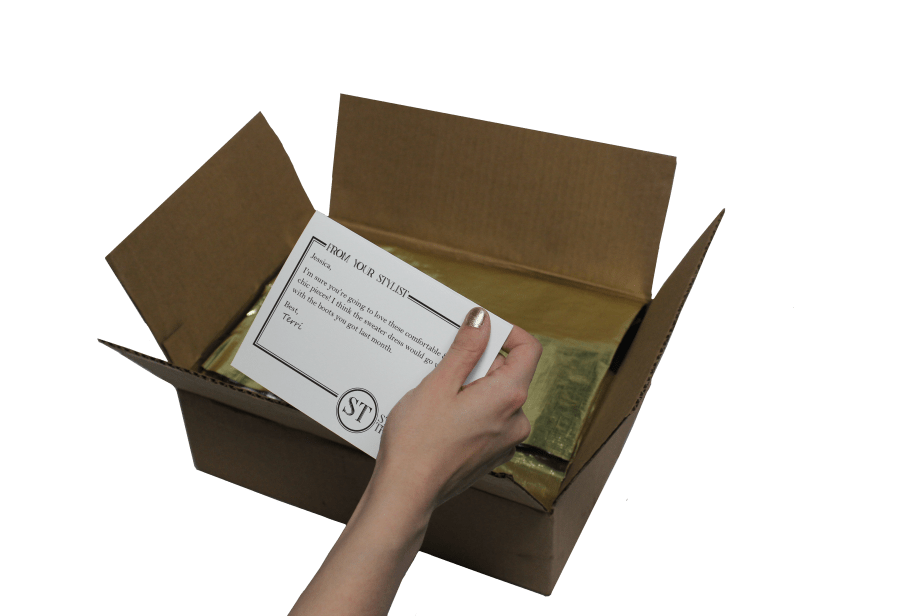
First, why do people purchase personalized products? Based on 71 interviews conducted by Jie Zhen et al., people purchase personalized products for reasons including: uniqueness seeking, emotional attachment, identity expression, enjoyment, vanity, innovation, ownership, and perceived control (Zhen et al., 18). These motivations can easily be used to a company’s advantage by creating personalized products that appeal to customers’ desires. Stitch Fix sells the idea of a lifestyle with unique expression and free will over one’s appearance and perceived capabilities and personality. “Fashion products have social and symbolic aspects, so people need reassurance about their fashion choices, which influence their acceptance and belonging in the group,” (Le Bon, 49). In general, people are very open to buying personalized products for themselves because having unique items helps build an identity and image for a certain place in their social structure. The persuasive appeals of unique identity and independence are used in the detailed personality and style quiz that helps decide what kinds of clothing will be sent to customers. Choosing between general style types, colors, and clothing features gives customers the perception of many categories and that their choice lead to a unique endpoint. “This “mere categorization effect” occurs by increasing choosers’ perceptions of variety, which increases their feelings of self-determination,” (Mogilner et al., 203). Having the option to return products and essentially undo purchase decisions greatly increases chances of consumers buying personalized products for themselves or as gifts (Choi et al., 520). People may scoff at the idea of letting a stranger pick out clothes for them, and not seeing the clothing until they are delivered. Clothing can vary in size from brand to brand, so it can be much easier to buy in person to get the right sizes. Stitch Fix has a free return policy, which takes away the members’ risk of being stuck with clothes or accessories they do not like. In fact, a Stitch Fix delivery can be entirely returned, so there is minimal risk of unwanted products. (However, the $20 ‘styling fee’ is kept until it can go toward a different item the member decides to keep.) There is an additional incentive of 25 percent off the entire box if all items are kept, so people can be persuaded that they are getting a better deal and a full outfit at the same time. Boxes can be ordered individually or at scheduled times, giving members even more freedom and independence in the buying process. This sense of control is attractive to customers and adds to the idea that they are getting a great deal for a worthwhile service.
One might argue that it makes more sense to shop for oneself instead of paying for a stylist to do it. The fashion industry has constantly changing trends and styles, so it makes sense that personalized shopping services have emerged as a way for the average person to keep on top of trends without spending too much time and energy researching. According to Caroline Le Bon’s book on the fashion market, the adoption of new styles follows the wealthy in cycles as different social groups use fashion to visually distinguish themselves. It becomes cyclical because the wealthy continue to quit certain styles and turn to new ones to look different from those copying expensive fashion. Le Bon writes, “The desire to be viewed as wealthy or equivalent to the higher economic class justifies this imitation,” (9). Keeping up with fashion and appearing more wealthy, successful, or professional is one of the major reasons to have a stylist or use a program like Stitch Fix, Trendy Butler, Sprezza, Trunk Club, Le Tote, and more personalized clothes-shopping services popping up in the flourishing fashion industry. Another reason this type of service is successful is due to the lifestyles associated with the brands sold.
People who use the higher-end, more expensive clothing services are typically business professionals who want to appear stylish and successful. Trendy clothing hand-picked by stylists tends to make the wearer more confident, especially when celebrities are using the same program. Stitch Fix distributes many brand-name clothing items and using recognizable brands “can help people communicate a sense of self-worth,” (Ahmad, 2451). Positive association with both rich celebrities and hardworking professionals appeals to a wider range of customers than celebrity endorsements alone. Stitch Fix often quotes customers articles and social media posts, showing customers that an average person can save time and money by using this product—and that the visual change of new clothing translates into vocational success and respect from peers.
Their media strategy is strategically telling stories of people transforming their lives and careers, saving time and money, and feeling more confident and expressive through their fashion choices. These positive features increase chances of customer satisfaction, which increases customer loyalty (Ahmad, 2451). Using narratives in the form of promoted content or re-posted customer testimonials is a great example of narrative persuasion. “Narrative persuasion is a message strategy to influence beliefs, attitudes, and behaviors through stories,” (Cho et al., 829). Narrative persuasion, when done right, can be powerful. If the audience connects with the narrative and recognizes aspects of their own lives reflected in the story, they will be impacted by the message. This is why it is a smart move to share customers’ posts with glowing reviews of fun, stylish clothing. Seeing regular people using this specialized service and having positive experiences gives Stitch Fix’s claims more credibility than promoted posts alone. “The more the audience perceives the character and the events involving the character as real, the greater the likelihood of identifying with the character,” (Cho et al., 833). It is important to keep in mind that customers need to be shown how using this service will bridge the gap between their current lives and their ideal lives which they hope will mirror the lifestyle of the wealthy and famous. This middle step is shown in happy Stitch Fix members using the shopping service to look and feel great—something other consumers recognize and want to join.
Promoted content about the service is another way to get a specific message to the public, but a study by Hanusch et al. discussed how the public can be rather suspicious of sponsored content. It is more difficult to be persuasive with sponsored content than organic word-of-mouth because sponsored messages are sometimes doubted as credible or reliable. When an audience doubts the motivations of a message source, the message is lost or misunderstood, potentially triggering reactance in the audience. “It may be that the degree to which a persuasive message threatens recipients’ positive and negative face wants influences subsequent resistance behaviors, such as message and source derogations and postmessage attitudes,” (Jenkins and Dragojevic, 562). Both businesses and journalists have to be careful when working on promoted content, because if audiences think a positive review was written only for money, that will hurt the business’ reputation more than the absence of a positive review. Interviews of 89 journalists from multiple countries found that most journalists who also worked in PR were “merging both roles, downplaying their PR activities, or disclaiming their responsibility for engaging in PR due to financial issues,” (Hanusch et al., 150). Many journalists in the fashion or lifestyle sector are given promotional items or sponsored for certain articles, which can bring up questions about bias and even cause the intended message to backfire. According to many of the interviewed journalists, they are pressured to maintain positive consumption-centric stories in the lifestyle section that is not expected of business or political stories (Hanusch et al., 154). The lifestyle journalists that present news about products and services are expected to maintain honesty, and whenever readers suspect otherwise, their source-receiver relationship is threatened. Politeness theory “characterizes resistance to persuasion as a defensive reaction to an unjustified relational claim,” (Jenkins and Dragojevic, 560). This negative reaction can happen whenever a message’s source assumes too much power or superiority over recievers.
Knowing that customers prefer a certain type of implied relationship in communications is helpful, but how do companies take advantage of this to word their advertisements? Stitch Fix aims for a friendly, near-equal power footing in communications. Many white papers released by Stitch Fix give advice on seasonal wardrobes or address certain issues with clothing relatable to many consumers. Elena Stephan et al. in their article “Politeness and Psychological Distance: A Construal Level Perspective,” studied how polite language in a message reflects and/or creates a social and psychological distance between the sender and receiver. On one hand, using polite language shows respect and makes the audience more likely to agree to requests, but overly polite language throws up a social and psychological barrier, making the two parties seem far-removed and the original message becomes less relevant to the intended audience (Stephan et al., 270). Once consumers perceive a company to be in separate social sphere that has little in common with their lives, it can be very difficult to rebuild an image that consumers identify with. Stitch Fix’s fashion articles are a solid example of messages that are overtly helpful and come across in a positive way. These articles are shared on social media and are promoted to catch more viewers’ attention. Instead of an annoying barrage of informercials, the articles are more like fashion news that merely happens to come from Stitch Fix.
Overall, Stitch Fix uses both logical and emotional appeals to sway consumers to use their service. The logical appeals include the convenience of saving time, money, and effort on clothes shopping. Other logical appeals are the very popular free shipping and free returns features, making the purchases seem completely independent and optional. Stitch Fix uses narrative persuasion and polite message encoding to get customers to feel like a part of a group when they become members of the service. These more emotional appeals make customers more likely to remain customers. Stitch Fix is selling a lifestyle of fashionable, popular, and successful people who are enhancing their lives with personalized shopping. Customers want to feel like they too can be more popular and attractive, and visual transformations are often an effective way to display social rank and influence. While some may prefer to shop for themselves, Stitch Fix is an attractive option for people looking to belong with the popular, stylish crowd.
Sources:
Ahmad, Amir. “Evaluation of the Relationship between Brand Measures and Customer Satisfaction by Using Data Mining Techniques.” Journal of Intelligent & Fuzzy Systems, vol. 33, no. 4, Oct. 2017, pp. 2451– 2462.
Cho, Hyunyi, et al. “Perceived Realism: Dimensions and Roles in Narrative Persuasion.” Communication Research, vol. 41, no. 6, Aug. 2014, pp. 828–851.
Choi, J., et al. The Influence of Purchasing Context and Reversibility of Choice on Consumer Responses Toward Personalized Products and Standardized Products. Psychological Reports, vol. 118, no. 2, 2016, pp. 510–526.
Festinger, Leon, and James M. Carlsmith. “Cognitive Consequences of Forced Compliance.” The Journal of Abnormal and Social Psychology, vol. 58, no. 2, 1959, pp. 203-210.
Hanusch, Folker, et al. “‘How Much Love Are You Going to Give This Brand?’ Lifestyle Journalists on Commercial Influences in Their Work.” Journalism, vol. 18, no. 2, Feb. 2017, pp. 141–158.
Jenkins, Mikayla, and Marko Dragojevic. “Explaining the Process of Resistance to Persuasion: A Politeness Theory-Based Approach.” Communication Research, vol. 40, no. 4, Aug. 2013, pp. 559–590.
Le Bon, Caroline. Fashion Marketing : Influencing Consumer Choice and Loyalty with Fashion Products, Business Expert Press, 2014. Mogilner, Cassie, et al. The Mere Categorization Effect: How the Presence of Categories Increases Choosers’ Perceptions of Assortment Variety and Outcome Satisfaction, Journal of Consumer Research, vol. 35, no. 2, 1 August 2008, pp. 202–215.
 Sarah Turek Productions